
The Middle East continues to experience significant development across infrastructure, real estate, hospitality, healthcare, transportation, industrial facilities, and commercial construction. As buildings and infrastructure projects become larger and more technically sophisticated, delivering the physical structure is only one part of creating a functional development.
Modern buildings depend heavily on mechanical, electrical, and plumbing systems to operate safely and efficiently. Air conditioning, power distribution, water supply, drainage, fire protection, lighting, ventilation, and building controls all have to work together from the moment a facility becomes operational.
This is why MEP contractors in the Middle East are becoming increasingly important. Their responsibilities now extend beyond installing individual systems. They contribute to planning, coordination, energy performance, digital integration, testing, commissioning, and the long-term reliability of modern buildings.
Understanding Why MEP Contractors Matter
MEP stands for mechanical, electrical, and plumbing, three groups of systems that form the operational backbone of almost every modern building.
Mechanical work generally includes heating, ventilation, and air-conditioning systems, along with other mechanical equipment required by a project. Electrical work covers power distribution, lighting, emergency systems, controls, and related infrastructure. Plumbing includes water supply, drainage, sanitation, and other water-related systems.
Depending on the project, an MEP contractor may also be responsible for fire protection, building management systems, low-current systems, energy management, and other specialized installations.
These systems need to operate together rather than independently. Poor coordination can lead to construction delays, installation conflicts, inefficient building performance, higher maintenance costs, and expensive modifications after completion.
For complex developments such as airports, hospitals, hotels, shopping centers, high-rise towers, data centers, and industrial facilities, effective MEP planning is therefore fundamental to successful project delivery.
Meeting the Demands of Large-Scale Development
Construction across the Middle East increasingly involves projects with demanding technical requirements. Large mixed-use developments may combine residential towers, hotels, offices, retail areas, entertainment facilities, and public spaces within the same development.
Every part of such a project can have different requirements for electricity, cooling, ventilation, water, fire safety, and control systems.
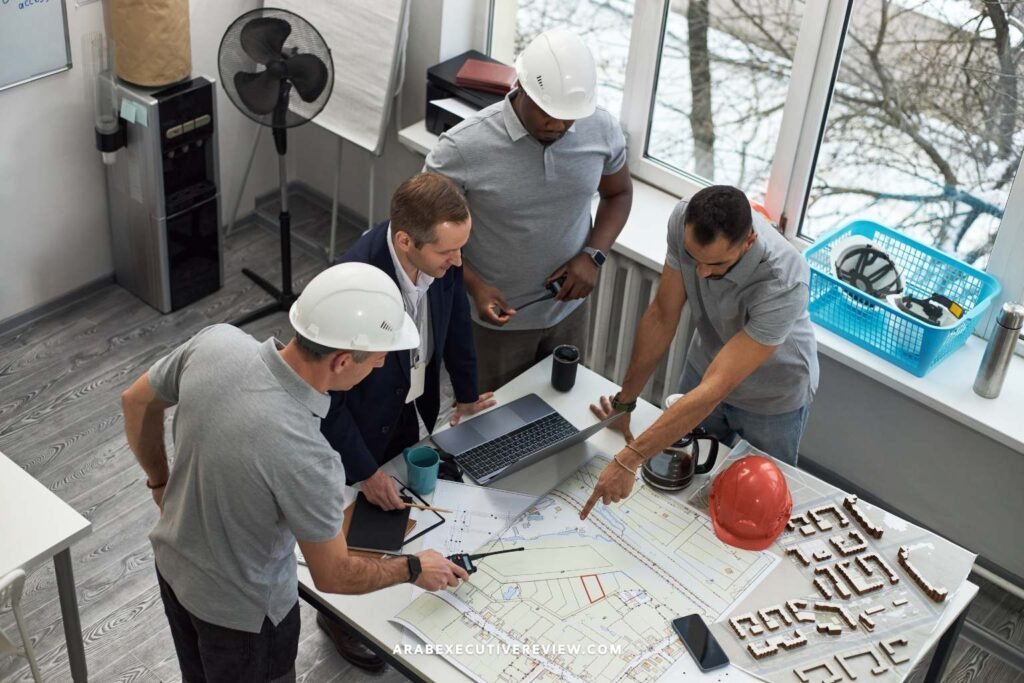
MEP contractors help coordinate these requirements and translate engineering designs into functioning building systems. They must work closely with architects, structural engineers, consultants, general contractors, equipment suppliers, and project owners throughout different stages of construction.
This coordination becomes particularly important when several systems need to occupy limited ceiling, shaft, plant-room, or service space. Identifying potential conflicts before installation can prevent expensive rework and help projects stay closer to their planned schedules.
Supporting Energy Efficiency and Sustainability
Energy performance has become another important reason MEP expertise matters in the Middle East.
Buildings in the region often have significant cooling requirements because of the climate. HVAC design, equipment selection, controls, insulation, lighting, and energy management can therefore have a considerable impact on overall building consumption.
MEP contractors can contribute to improved performance through efficient HVAC equipment, LED lighting, smart controls, variable-speed systems, efficient pumps, energy monitoring, and properly integrated building management systems.
Water efficiency is equally relevant. Plumbing systems can incorporate efficient fixtures, improved water management, leak detection, and, where appropriate, water reuse technologies.
As developers pay greater attention to sustainability and operating costs, MEP contractors with experience in energy-efficient technologies are becoming increasingly valuable throughout the construction process.
Bringing Smart Technology Into Buildings
Buildings across the Middle East are also becoming more connected.
Instead of treating cooling, lighting, electricity, security, and other building services as completely separate functions, modern projects can connect multiple systems through centralized digital platforms.
Building management systems can allow facility teams to monitor equipment, temperature, ventilation, lighting, energy consumption, and other operating conditions from a central interface.
This creates a new responsibility for MEP contractors. Contractors increasingly need knowledge not only of physical equipment and installation but also of controls, sensors, automation, system integration, and digital commissioning.
When these technologies are properly integrated, building operators can identify problems earlier, understand energy consumption more clearly, and make adjustments that improve efficiency and occupant comfort.
Using BIM to Improve Coordination
Building Information Modeling has significantly changed how complex MEP installations can be planned.
Traditional two-dimensional drawings may make it difficult to identify every potential conflict between pipes, ducts, cable trays, structural components, and architectural elements. BIM allows project teams to coordinate these systems within a detailed digital model before much of the physical installation begins.
For MEP contractors, this can make it easier to detect clashes, plan installation sequences, estimate material requirements, coordinate with other trades, and understand how systems fit into available spaces.
Digital coordination is particularly useful on projects where large numbers of services need to pass through restricted areas.
As Middle Eastern construction projects become increasingly sophisticated, strong BIM capability is becoming an important part of modern MEP project delivery.
Improving Safety and Building Reliability
MEP systems also have a direct relationship with building safety.
Electrical installations need to distribute power reliably while protecting occupants and equipment. Fire detection and suppression systems need to respond effectively during emergencies. Ventilation systems need to maintain appropriate indoor conditions, while plumbing and drainage systems must operate safely and hygienically.
MEP contractors are responsible for installing, testing, and commissioning many of these critical systems according to project specifications and applicable requirements.
Testing and commissioning are especially important. A system may appear complete physically but still fail to perform correctly if controls, equipment, or interconnected components have not been properly configured.
Thorough commissioning helps confirm that the building’s systems operate as designed before the facility is handed over.
Supporting Long-Term Building Performance
The importance of an MEP contractor does not necessarily end when construction is completed.
Buildings can remain operational for decades, making maintainability an important consideration during design and installation. Equipment needs sufficient access for inspection, servicing, replacement, and repair.
A poorly planned installation can create long-term problems even when it functions correctly at first. Difficult-to-access equipment, unnecessarily complicated layouts, or poorly documented systems can increase maintenance time and operating expenses.
Experienced MEP contractors can consider these operational requirements during construction. Proper labeling, documentation, equipment access, testing records, and handover information can all help facility management teams operate the building more effectively.
Developing Specialized MEP Expertise
The growing technical complexity of construction is also increasing demand for specialized skills.
Modern MEP projects require mechanical and electrical engineers, BIM specialists, project managers, commissioning professionals, supervisors, technicians, and skilled tradespeople. Knowledge of automation, energy management, smart building systems, and sustainable construction is becoming increasingly relevant.
For contractors operating in the Middle East, developing this technical workforce can become an important competitive advantage.
Companies capable of combining engineering expertise with digital tools, effective project management, quality control, and skilled installation teams are better equipped to handle increasingly complex projects.
Frequently Asked Questions
What does an MEP contractor do?
An MEP contractor manages the installation and coordination of mechanical, electrical, and plumbing systems within a building or infrastructure project.
Why are MEP contractors important in the Middle East?
MEP contractors support complex construction projects by delivering essential systems such as cooling, power, water, ventilation, fire protection, and building controls.
What types of projects require MEP contractors?
MEP contractors work on residential towers, hotels, hospitals, offices, shopping centers, airports, data centers, industrial facilities, and large infrastructure projects.
How do MEP contractors improve energy efficiency?
They can install efficient HVAC systems, smart controls, LED lighting, energy monitoring technologies, and water-saving systems that help reduce resource consumption.
What role does BIM play in MEP projects?
BIM helps contractors coordinate pipes, ducts, electrical systems, and other building services digitally, allowing potential clashes to be identified before installation.
Conclusion
The growing complexity of construction across the Middle East is making MEP contractors an increasingly important part of project development. From HVAC and electrical infrastructure to plumbing, fire protection, automation, and smart building technologies, these contractors help ensure that modern facilities operate safely and efficiently.
As developers place greater emphasis on sustainability, digital integration, energy efficiency, and long-term building performance, the role of MEP contractors is continuing to expand. Their technical expertise and ability to coordinate critical building systems will remain essential as the Middle East develops its next generation of infrastructure and modern buildings.