






Sharjah is positioning its industrial base and expanding logistics network at the centre of its next investment cycle as the emirate looks to attract more long-term international capital into manufacturing, technology, infrastructure and supply-chain projects.
Ahead of the Sharjah Investment Forum 2026, Invest in Sharjah CEO Mohamed Juma Al Musharrkh has outlined how the emirate plans to connect its established manufacturing capacity with ports, inland logistics, emerging technologies and future rail connectivity.
The strategy comes as global companies reconsider where they manufacture, store goods and build supply chains amid changing trade routes and geopolitical disruption. For Sharjah, those shifts are creating an opportunity to present itself as both an industrial production centre and a gateway to regional and international markets.
Sharjah Builds on a Large Industrial Base
Industry already plays an important role in Sharjah’s economy.
The emirate has more than 2,800 factories across 21 industrial zones and accounts for approximately 40% of the UAE’s industrial establishments, according to Invest in Sharjah.
Manufacturing represented 18.1% of Sharjah’s nominal GDP in 2024, while industrial investment reached AED 1.6 billion across 31 projects in 2025. Industrial real estate transactions also increased 88.7% to AED 9.24 billion during the year.
Sharjah is now looking to build greater specialisation around this existing base.
Advanced manufacturing, industrial automation, robotics, specialised components, food technology, applied artificial intelligence and supply-chain solutions have been identified among areas where the emirate sees opportunities for international investment.
Rather than building an entirely new industrial ecosystem, the strategy is increasingly about bringing technology and global capital into industries where Sharjah already has scale.
Logistics Could Become a Bigger Investment Advantage
Sharjah’s geographic position gives its industrial strategy another important dimension.
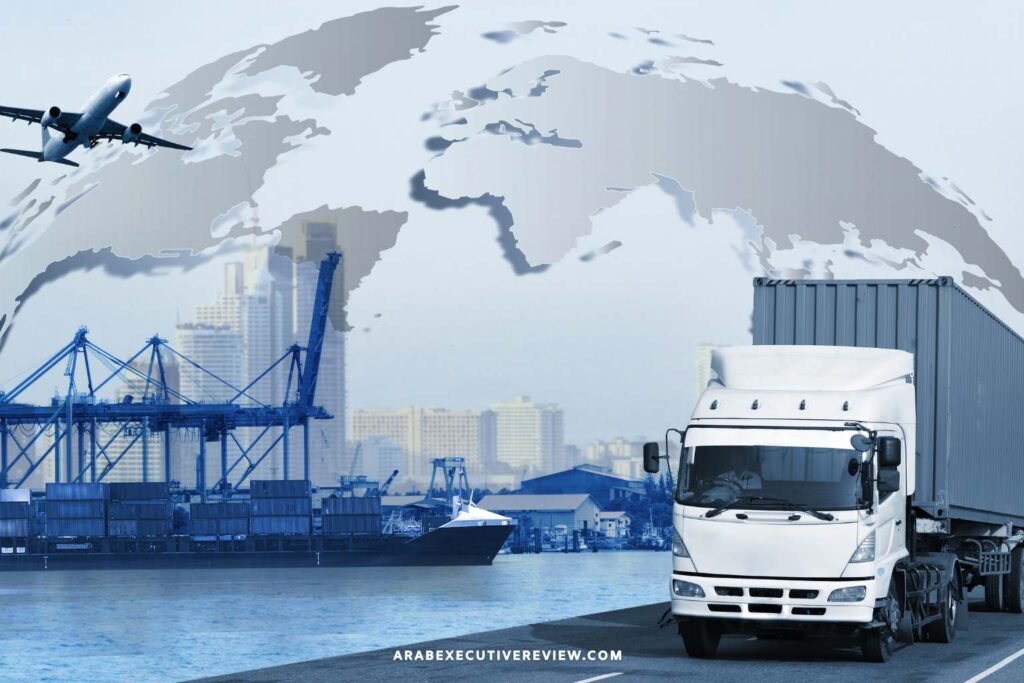
Its maritime infrastructure provides access to both the Arabian Gulf and Gulf of Oman, giving companies different options for moving products into international markets.
Khorfakkan Container Terminal, located on the Indian Ocean side outside the Strait of Hormuz, currently has annual capacity of around 5 million TEUs, according to Gulftainer figures cited by Invest in Sharjah. Longer-term plans target capacity exceeding 10 million TEUs.
Sharjah also plans to develop the Al Dhaid Multi-Modal Trade Corridor, connecting inland logistics infrastructure with Khorfakkan Port and eventually Etihad Rail.
The combination could create a more integrated network connecting factories, warehouses, roads, ports and rail infrastructure.
Supply-Chain Changes Create New Opportunities
The timing of these investments is significant.
Companies around the world are reassessing supply chains following years of geopolitical disruption, changing trade relationships and transportation challenges.
That has increased the importance of locations that offer businesses multiple ways to move goods.
Sharjah Airport adds another component to this network. The airport handled more than 204,000 tonnes of cargo in 2025, adding air freight to the emirate’s existing road and maritime connectivity.
For manufacturers, distributors and logistics companies, having access to different transport channels can reduce dependence on a single route and provide greater flexibility when global supply chains face disruption.
Sharjah authorities are also working to improve the efficiency of ports and border points as passenger and commercial traffic grows. Officials discussed operational coordination, inspection procedures and faster processing at a meeting on October 4.
Free Zones Are Targeting International Companies
Sharjah’s free zones are also playing a role in attracting specialised industries.
On October 6, the Sharjah Airport International Free Zone (SAIF Zone) highlighted investment opportunities for global fragrance, cosmetics and personal-care businesses at Beautyworld Middle East 2026.
The free zone is promoting infrastructure covering raw-material sourcing, manufacturing, packaging, logistics and distribution, alongside customs facilitation and cargo services.
This reflects a broader approach in which Sharjah is trying to attract businesses across entire value chains rather than simply providing companies with office or warehouse space.
Technology Is Becoming Part of the Industrial Strategy
Technology investment is another important part of Sharjah’s next growth phase.
Invest in Sharjah sees opportunities to introduce automation, robotics, AI and other advanced technologies into established industrial sectors.
Globally, data centres alone attracted more than $270 billion in announced FDI in 2025, according to figures cited by Invest in Sharjah. Sharjah’s strategy is to connect growing technology investment with its existing manufacturing capabilities.
This could allow the emirate to compete for investment not only on location and infrastructure but also on productivity, technology adoption and specialised manufacturing capabilities.
Sharjah Investment Forum Puts the Strategy in Focus
Many of these priorities will be discussed at the Sharjah Investment Forum 2026, scheduled for October 14–15.
Held under the theme “Building Adaptive Economies,” the forum will focus on regulatory competitiveness, AI and industrial transformation, capital flows, supply-chain resilience and future economic growth.
The timing comes as investors become increasingly selective about where they deploy capital.
Sharjah recorded a 45% increase in FDI projects in 2025, a figure that Invest in Sharjah says reflects growing international interest in the emirate.
The Next Phase of Sharjah’s Investment Story
Sharjah’s next investment phase appears to be moving beyond simply attracting more projects.
The emirate is trying to connect manufacturing capacity, technology, ports, free zones, logistics infrastructure and eventually rail into a more integrated economic ecosystem.
For an international manufacturer, that could mean developing or commercialising a product, manufacturing it in Sharjah and using the emirate’s logistics infrastructure to reach regional and international customers.
That integration could become increasingly important as companies prioritise resilient supply chains and seek locations offering both production capacity and multiple routes to market.
The challenge for Sharjah will be turning planned infrastructure and investment opportunities into commercially viable projects at scale.
With the Sharjah Investment Forum approaching and new attention on industrial transformation and supply-chain resilience, the emirate is making its case that its next wave of global investment can be built not around one sector, but around the connection between industry, technology and logistics.