
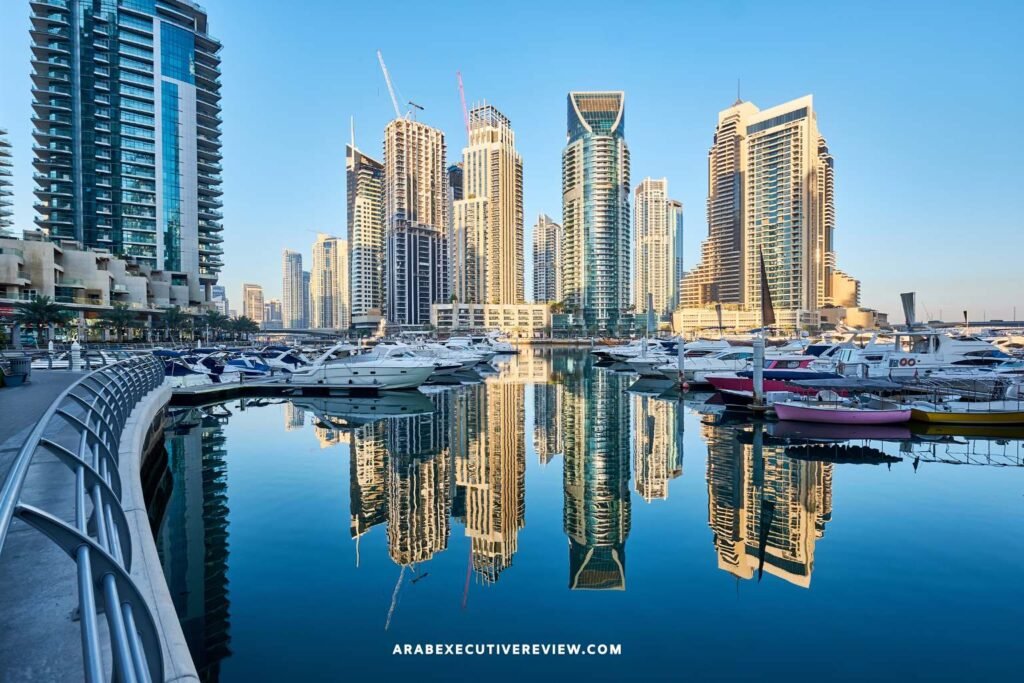
Dubai tourism industry is becoming an increasingly important part of the emirate’s wider business economy. Visitor numbers remain high, hotels are operating at significant occupancy levels, and investment in hospitality continues to expand the city’s capacity.
The latest figures from the Dubai Department of Economy and Tourism show that Dubai welcomed 6.97 million international overnight visitors during the first eight months of 2026. In August alone, the emirate received approximately 869,000 international visitors.
The scale of this activity matters beyond hotels and airlines. Tourism supports restaurants, retail, entertainment, transportation, events, real estate and a wide range of service businesses.
Dubai Started 2026 With Strong Visitor Demand
Dubai welcomed 2 million international overnight visitors in January 2026, according to the city’s official tourism performance report. That was 3% higher than January 2025.
The increase came from a broad mix of source markets.
The January data showed growth across several regions, including South Asia, Western Europe, the CIS and Eastern Europe, North Asia and Southeast Asia, the GCC and Africa.
A diverse visitor base is important for the tourism industry because it gives businesses access to demand from different markets rather than relying heavily on one region.
2025 Set Another Tourism Record
The momentum entering 2026 followed a record year.
Dubai welcomed 19.59 million international overnight visitors in 2025, up 5% from 18.72 million in 2024. It was the third consecutive year in which the city recorded a new annual visitor record.
December was particularly notable, with more than 2 million visitors arriving during a single month for the first time.
The performance shows how tourism has developed into a large-scale economic activity rather than a seasonal industry dependent on a small number of peak periods.
Hotels Are Benefiting From the Demand
Visitor growth has been accompanied by strong hotel performance.
Dubai ended 2025 with 154,264 hotel rooms across 827 establishments. Average hotel occupancy reached 80.7%, compared with 78.2% in 2024.
Occupied room nights increased 4% to 44.85 million. At the same time, the average daily rate increased 8% to AED 579, while revenue per available room rose 11% to AED 467.
These figures are significant for the hospitality business because they show growth in both demand and hotel revenue indicators.
The market is also continuing to add new properties across different segments, giving visitors more choices while creating additional capacity for future demand.
Tourism Is Creating Opportunities Beyond Hotels
The economic impact of tourism extends well beyond accommodation.
Visitors spend money on restaurants, attractions, shopping, taxis, car rentals, entertainment and cultural experiences. Business travellers also contribute to conferences, exhibitions and corporate events.
This creates a network of businesses that benefit from visitor activity.
A hotel opening, for example, can create demand for food suppliers, cleaning services, transport operators, technology providers and other local businesses.
For Dubai, this makes tourism an important part of the broader services economy.
Business Events Are Part of the Growth Model
Dubai’s tourism strategy also overlaps with its role as a business and events destination.
Conferences, exhibitions and large-scale events can bring visitors who combine business activity with leisure spending.
This creates what is often described as business tourism, where hotels, venues, restaurants, airlines and other service providers benefit from corporate visitors.
The model is particularly relevant for Dubai because the city has built infrastructure around international events, hospitality and business travel.
Tourism therefore does not operate separately from the wider commercial economy.
Investment Is Following Tourism Demand
Tourism performance can also influence investment decisions.
According to Dubai’s tourism authority, hotels and tourism represented 21.3% of estimated FDI capital flows into Dubai during the first half of 2025, based on data from the Financial Times’ fDi Markets database.
That investment supports new hotels, renovations, tourism experiences and related infrastructure.
The growing hotel inventory also indicates that investors continue to see opportunities in the city’s visitor economy.
However, additional supply also creates competition. Hotel operators need to maintain service quality, manage costs and respond to changing visitor expectations as the market expands.
Sustainability Is Becoming Part of Hospitality
Another development is the growing focus on sustainability.
In July 2026, Dubai recognised 237 hotels through its Dubai Sustainable Tourism Stamp programme. That represented a 55% increase from the previous cycle, when 153 hotels were recognised.
The programme evaluates participating hotels on sustainability practices.
For the hospitality industry, sustainability is becoming connected to both operational efficiency and the visitor experience.
Energy use, water consumption, waste management and resource efficiency can affect hotel costs, while sustainability credentials can also become part of how properties position themselves in an increasingly competitive market.
Technology Is Changing the Visitor Experience
Dubai is also using technology to reduce friction for visitors.
The Department of Economy and Tourism has introduced a contactless hotel check-in system that allows participating hotels and holiday homes to use identification and biometric information to streamline the arrival process.
Technology is becoming increasingly important across tourism, from booking platforms and digital payments to personalised recommendations and automated services.
The wider impact is that tourism businesses are becoming technology businesses as well.
Hotels, attractions and travel companies need digital systems to understand customers, manage bookings and improve operations.
Tourism Is Becoming More Connected to Dubai’s Economy
The latest data suggests that Dubai’s tourism industry is no longer simply about attracting more visitors.
The bigger story is how visitor spending connects with other parts of the economy.
Hotels require suppliers. Attractions need employees and technology. Restaurants depend on visitor traffic. Events create demand for venues, transportation and accommodation. Retailers benefit from international consumers.
This creates a broad economic network around tourism.
The continued growth of international visitation therefore has implications for businesses that may not describe themselves as tourism companies at all.
What Comes Next for Dubai Tourism
Dubai entered 2026 with strong tourism momentum, and the first eight months have continued to show substantial visitor activity.
The emirate welcomed 6.97 million international overnight visitors between January and August, while hotels recorded 21.61 million occupied room nights during the same period. Hotel occupancy reached 66% in August, compared with 36% in March, according to the latest figures from the Dubai Department of Economy and Tourism.
The next phase will involve managing growth while maintaining the quality and competitiveness of the visitor economy.
For businesses, that means opportunities across hospitality, food and beverage, retail, entertainment, events, transportation, technology and sustainability.
Dubai’s tourism sector is therefore becoming more than a destination business. It is increasingly part of the emirate’s wider economic infrastructure.