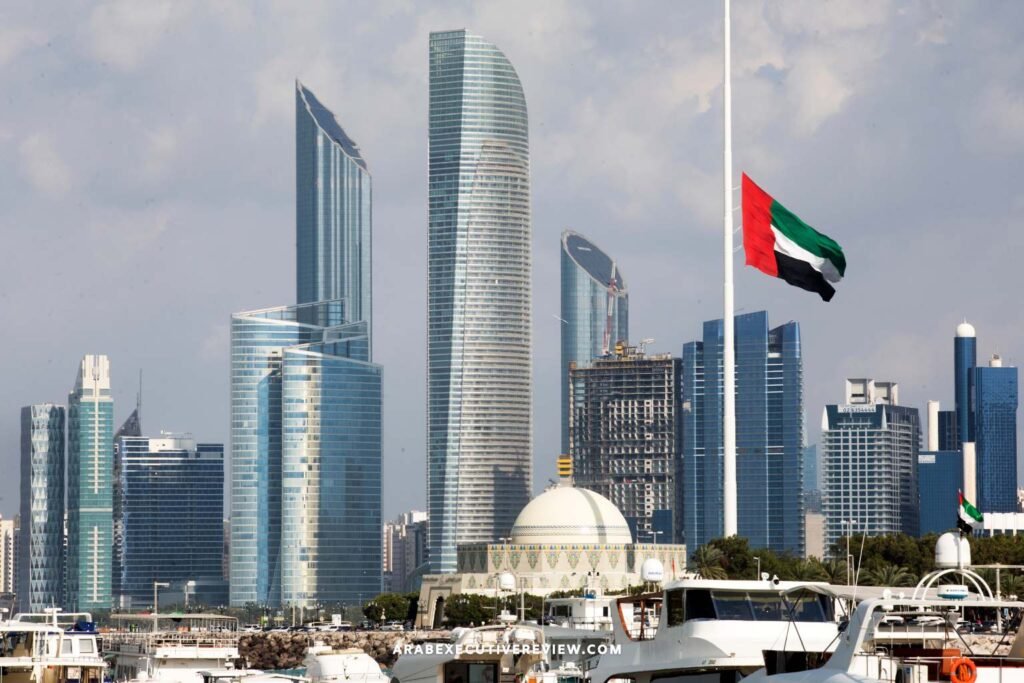


The United Arab Emirates has become one of the Middle East’s most established locations for multinational companies managing operations across the region. Dubai and Abu Dhabi, in particular, host international businesses operating in technology, finance, professional services, logistics, consumer goods, healthcare, energy, aviation, and other industries.
For many of these companies, the UAE is more than an individual market. It can function as a base for managing business across the Gulf Cooperation Council, the wider Middle East, Africa, South Asia, and other nearby markets.
This role has been built through decades of investment in infrastructure, international connectivity, free zones, financial centers, and business services. Recent foreign investment figures also demonstrate the country’s continuing international appeal. According to UN Trade and Development, foreign direct investment inflows into the UAE reached approximately $45.6 billion in 2024, up 48% from the previous year.
So why are international companies continuing to establish regional headquarters and major regional operations in the UAE?
Strategic Access to Multiple Markets
Location is one of the UAE’s most important advantages.
The country sits between Asia, Europe, and Africa, providing relatively convenient access to several major economic regions.
A company operating from the UAE can manage customers, suppliers, employees, and partners across Gulf markets while remaining well connected to India, Southeast Asia, Africa, and Europe.
This is particularly valuable for multinational businesses that do not want to operate separate management centers in every individual market.
A regional headquarters can centralize functions such as finance, sales, marketing, human resources, strategy, procurement, and business development while local subsidiaries focus on individual countries.
Dubai Has Built an International Business Ecosystem
Dubai has spent decades developing itself as an international commercial center.
Its business environment includes multinational companies, professional-service firms, banks, logistics providers, technology businesses, investors, legal advisers, recruiters, and consultants.
This creates an ecosystem that can make establishing regional operations easier.
A multinational opening an office in Dubai does not need to build every supporting relationship from the beginning. Many of the legal, financial, technology, recruitment, logistics, and professional services required by international businesses are already available.
The presence of other multinational companies also creates a network effect. Customers, suppliers, partners, competitors, and potential employees may already be located in the same city.
Abu Dhabi Is Strengthening Its Corporate Position
Dubai is not the UAE’s only corporate center.
Abu Dhabi has increasingly developed its position in international finance, technology, energy, investment, and advanced industries.
The emirate is home to major sovereign wealth funds, government-linked companies, financial institutions, and energy businesses. Abu Dhabi Global Market has also developed into a significant international financial center.
For companies working in finance, asset management, energy, artificial intelligence, healthcare, advanced technology, and investment, Abu Dhabi can provide access to important institutional relationships.
This gives multinational companies different options within the UAE depending on their industry and strategic priorities.
World-Class Aviation Connectivity
Regional headquarters need to be accessible.
Senior executives frequently travel between offices, customers, conferences, suppliers, and government meetings. International aviation connectivity therefore plays a significant role when companies choose regional headquarters.
Dubai International Airport is one of the world’s busiest international passenger airports, while Abu Dhabi also provides extensive global connections.
Emirates and Etihad Airways connect the UAE with major cities across Asia, Europe, Africa, the Americas, and Oceania.
For a regional executive responsible for multiple countries, direct international flights can reduce the time and complexity involved in managing geographically dispersed operations.
Ports and Logistics Strengthen the UAE’s Appeal
The UAE’s importance extends beyond passenger travel.
Its ports and logistics infrastructure make the country particularly attractive to businesses involved in manufacturing, retail, consumer products, e-commerce, industrial equipment, automotive products, and international trade.
Jebel Ali Port and the surrounding logistics ecosystem connect businesses with shipping routes serving major international markets.
Companies can combine corporate management functions with warehousing, distribution, and regional supply-chain operations.
This combination of headquarters infrastructure and physical trade connectivity is difficult for many competing locations to replicate.
Free Zones Provide Specialized Business Environments
Free zones have played an important role in attracting international companies to the UAE.
Rather than functioning simply as areas for company registration, many UAE free zones have developed into specialized industry ecosystems.
Dubai International Financial Centre focuses on finance and professional services. Dubai Multi Commodities Centre supports commodities and a broad range of international businesses, while other zones specialize in technology, media, healthcare, logistics, and manufacturing.
Abu Dhabi Global Market provides another international financial and professional-services environment.
For multinational companies, these ecosystems can offer established regulatory frameworks, office infrastructure, professional networks, and access to businesses operating within similar industries.
Foreign Ownership Reforms Have Increased Flexibility
The UAE has also changed its company ownership framework.
Historically, many businesses operating outside free zones needed a UAE national shareholder. Reforms have since permitted 100% foreign ownership for many commercial activities, although specific requirements can vary depending on the business and sector.
This provides international companies with greater flexibility when deciding how to structure their regional operations.
Companies can compare mainland and free-zone structures and select the model that best matches their customers, activities, staffing needs, and expansion plans.
A Competitive Corporate Tax Environment
Taxation is another consideration when companies select regional headquarters.
The UAE introduced federal corporate tax for financial years beginning on or after June 1, 2023. The general rate is 9% on taxable income exceeding AED 375,000, with specific rules applying to qualifying free-zone businesses and certain other entities.
The country also does not impose personal income tax on individuals.
However, multinational corporations must consider more than headline tax rates. Transfer pricing requirements, VAT, international tax rules, and the OECD global minimum tax framework can affect larger corporate groups.
The UAE’s attraction as a headquarters location therefore depends on its wider business environment rather than taxation alone.
Access to an International Workforce
Regional headquarters need people who understand different markets, cultures, and industries.
The UAE has developed a highly international workforce containing professionals from across the Middle East, Asia, Europe, Africa, and other regions.
Companies can recruit executives, engineers, financial professionals, technology specialists, marketers, consultants, and other employees with experience across multiple markets.
English is also widely used in business, which can simplify communication within multinational teams.
This diversity is particularly useful for headquarters responsible for countries with very different customer expectations and commercial environments.
Long-Term Residency Options Support Talent Retention
Attracting employees is only one part of building a regional office. Companies also need to retain experienced professionals.
The UAE has introduced longer-term residency options, including Golden Visas for eligible investors, entrepreneurs, executives, specialists, and other qualifying individuals.
Such programs can provide greater stability for professionals considering longer-term careers in the country.
For multinational employers, a more stable residency environment can support recruitment and retention, particularly for senior executives and specialized talent.
Strong Digital Infrastructure
Regional headquarters increasingly depend on technology rather than physical paperwork and traditional office systems.
Cloud computing, video conferencing, cybersecurity, data services, digital banking, online government services, and telecommunications infrastructure are essential to modern corporate operations.
The UAE has invested heavily in digital connectivity and government digitalization.
Businesses can complete many administrative processes electronically, while high-quality telecommunications infrastructure supports companies coordinating teams across multiple countries.
As multinational operations become more digital, this infrastructure becomes increasingly important in headquarters-location decisions.
Access to Financial Services and Capital
The UAE has developed one of the region’s largest financial ecosystems.
International and regional banks, asset managers, private equity firms, venture capital investors, insurance companies, family offices, and professional advisers operate from the country.
Dubai International Financial Centre and Abu Dhabi Global Market have strengthened this environment by attracting financial institutions and investment firms.
For international companies, proximity to financial institutions can simplify corporate banking, financing, treasury operations, investment, acquisitions, and regional transactions.
It can also help businesses develop relationships with investors and major institutional partners.
The UAE Provides Access to Growing Regional Economies
The Gulf and wider Middle East contain several markets undergoing substantial economic development.
Saudi Arabia is implementing major economic diversification programs. Qatar continues investing in infrastructure and energy. Oman and Bahrain are developing new industries, while the wider Middle East and Africa present opportunities in technology, consumer markets, logistics, healthcare, financial services, and infrastructure.
A UAE regional headquarters can provide a central location from which companies coordinate expansion across these markets.
Importantly, the UAE does not eliminate the need for local operations. Companies still need to understand regulations, customers, culture, and commercial conditions in each country.
Instead, the headquarters provides a central management platform connecting these individual markets.
Trade Agreements Are Expanding International Connections
The UAE has also been building a network of Comprehensive Economic Partnership Agreements with international trading partners.
These agreements are intended to reduce trade barriers, improve market access, and encourage investment.
For companies using the UAE as a regional distribution or management center, stronger trade relationships with economies across Asia, Africa, and other regions can increase the country’s strategic value.
This supports the UAE’s broader objective of becoming a connecting point between major global markets.
Quality of Life Matters for Executives
Corporate location decisions are not based entirely on regulations and infrastructure.
Multinational companies must persuade employees and their families to relocate.
Dubai and Abu Dhabi offer international schools, private healthcare, residential communities, restaurants, retail, entertainment, and extensive international travel connections.
These factors can influence whether executives are willing to accept long-term regional assignments.
A headquarters location that employees find practical for family life can make recruitment and retention easier.
Competition for Regional Headquarters Is Increasing
The UAE does not operate without competition.
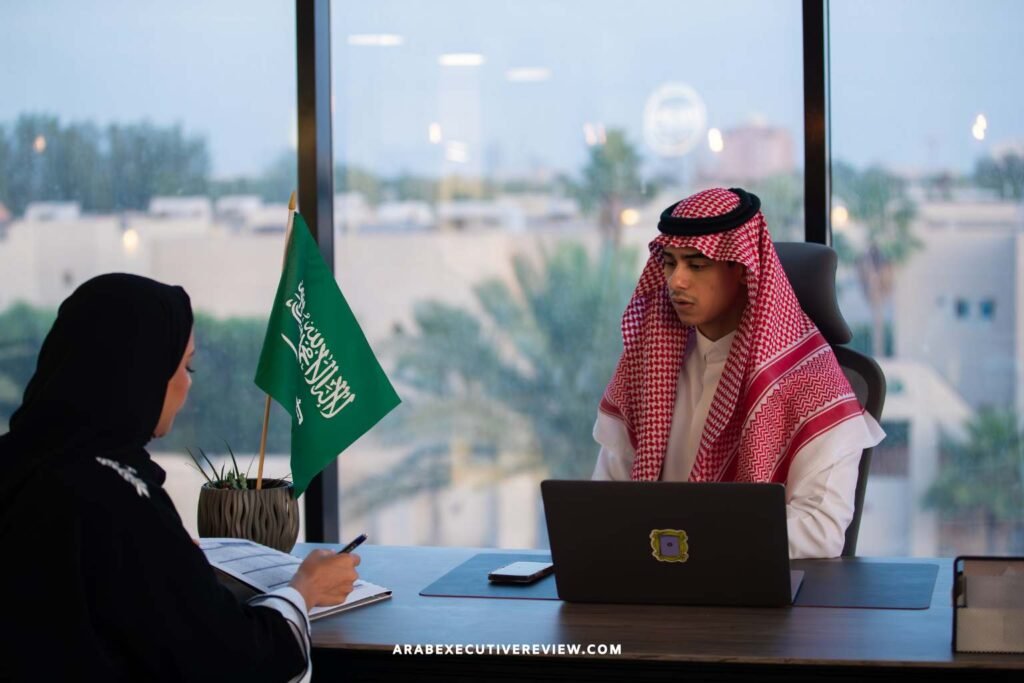
Saudi Arabia is actively developing Riyadh as a major regional headquarters destination and has introduced its Regional Headquarters program as part of its broader economic strategy.
Other Gulf states are also seeking international investment and corporate operations.
This competition means the UAE must continue improving its business environment, infrastructure, talent policies, regulatory systems, and sector-specific ecosystems.
For multinational companies, greater competition among Gulf business centers may ultimately provide more choices when determining where different regional functions should be located.
Companies Are Increasingly Using Multi-Hub Strategies
Regional headquarters decisions do not always involve choosing one Gulf city over another.
Some multinational businesses may increasingly adopt multi-hub strategies.
A company could maintain regional management, finance, or international operations in Dubai while developing significant commercial teams in Riyadh to serve the Saudi market. Abu Dhabi might host investment, energy, or technology functions.
This reflects the increasing size and sophistication of Gulf economies.
Rather than one location replacing another, multinational companies may distribute operations according to the strengths of individual cities.
FAQs
Why do international companies choose the UAE for regional headquarters?
The UAE provides strategic geography, international connectivity, modern infrastructure, business services, financial centers, skilled talent, and access to multiple regional markets.
Is Dubai the main headquarters location in the UAE?
Dubai hosts a large number of multinational regional operations, but Abu Dhabi is also growing as an important center for finance, energy, investment, and technology.
Can foreign companies fully own UAE businesses?
Foreign investors can own 100% of companies in many business activities, although regulations depend on the sector, activity, and company structure.
What industries use the UAE as a regional base?
Technology, finance, consulting, consumer goods, healthcare, logistics, aviation, energy, manufacturing, and professional services are among the industries with significant international operations in the UAE.
Is the UAE facing competition from Saudi Arabia?
Yes. Riyadh is increasingly competing for multinational regional headquarters, while many companies may choose to maintain substantial operations in both Saudi Arabia and the UAE.
Conclusion
International companies are establishing regional headquarters in the UAE because the country combines several characteristics multinational businesses need in one location.
Its strategic geography connects major markets, while aviation and logistics infrastructure facilitate regional operations. Free zones, financial centers, digital infrastructure, foreign ownership reforms, international talent, and established professional-service networks further strengthen its appeal.
At the same time, competition among Gulf business centers is increasing. Saudi Arabia’s expanding economy and regional headquarters strategy mean multinational companies now have more options when deciding how to organize Middle Eastern operations.
The UAE’s longer-term advantage will therefore depend on continuing to improve its business environment while building deeper capabilities in technology, finance, logistics, investment, and other high-value industries.
Rather than simply serving as an entry point to the Middle East, the UAE is seeking to remain a place where international companies can coordinate increasingly complex operations across the Gulf, Africa, Asia, and the wider global economy.